  1. Blog
  2. Article

Canonical
on 4 April 2017

Nexiona collaborates with Canonical and Dell to create MIIMETIQ Edge
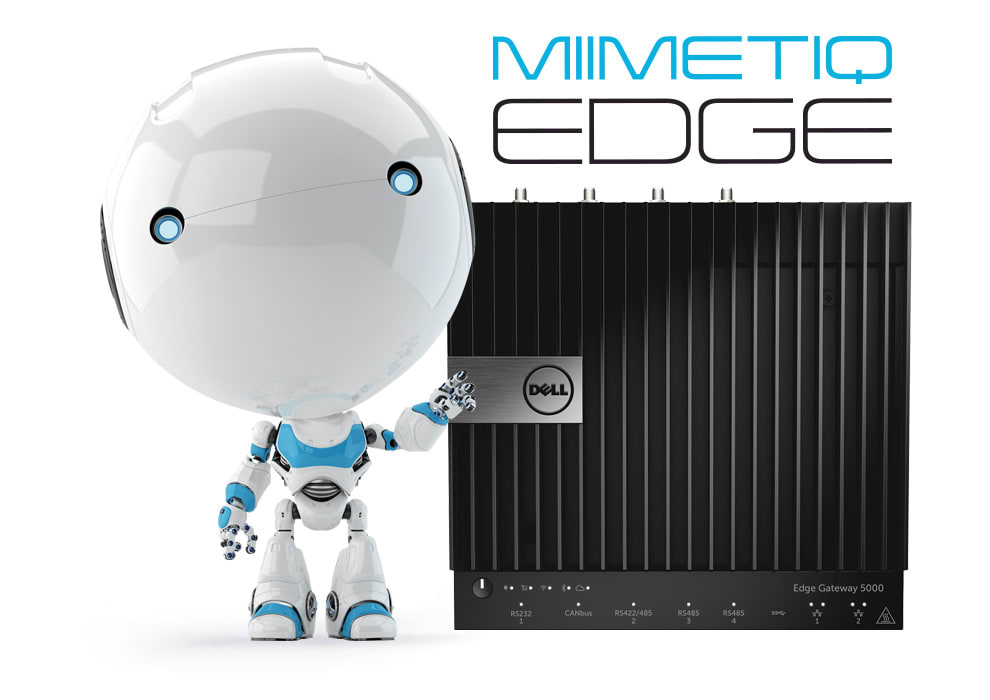

There is a perception that IoT projects are complex, expensive and therefore limited to larger companies that have the means to manage them. However, the reality is very different. Nexiona, creators of IoT technology for system integrators, has developed a package that’s affordable to all company sizes – with a process that’s simple enough for any system integrator to install.

The package is an all-in-one IoT solution within a single box. It combines Nexiona’s MIIMETIQ EDGE platform, Dell’s robust and affordable hardware and Ubuntu’s secure and well-known OS that easily adapts to enterprise – a solution unlike anything else on the market.

Learn more about the product, how it can benefit your SME and it’s presence in various market sectors in the case study below.
Download the case study

Related posts


ijlal-loutfi
6 March 2026

Sovereign clouds: enhanced data security with confidential computing 

Confidential computing Article

Increasingly, enterprises are interested in improving their level of control over their data, achieving digital sovereignty, and even building their own sovereign cloud. However, this means moving beyond thinking about just where your data is stored to thinking about the entire data lifecycle.  In this blog, we cover the differences betwe ...


Massimiliano Gori
2 March 2026

Supporting more identity providers on Ubuntu with the new Authd OIDC broker

Cloud and server Article

Today we are announcing the general availability of the new generic OpenID Connect (OIDC) broker for Authd. With enterprises needing to centralise access management controls, the ability to choose your own identity solution is paramount. This new broker snap is our answer to that need, allowing Ubuntu Desktop and Server to integrate with ...


Bertrand Boisseau
2 March 2026

Cloud-native Android™ infotainment: your CI pipeline shouldn’t depend on hardware

Automotive Article

More and more often, infotainment systems are being developed and delivered like software, yet often they are still tested and validated using hardware-centric processes. This is far from ideal: access to devices is limited, environments are difficult to reproduce, and iteration slows down as soon as multiple teams need to work in paralle ...